
Quick Answer
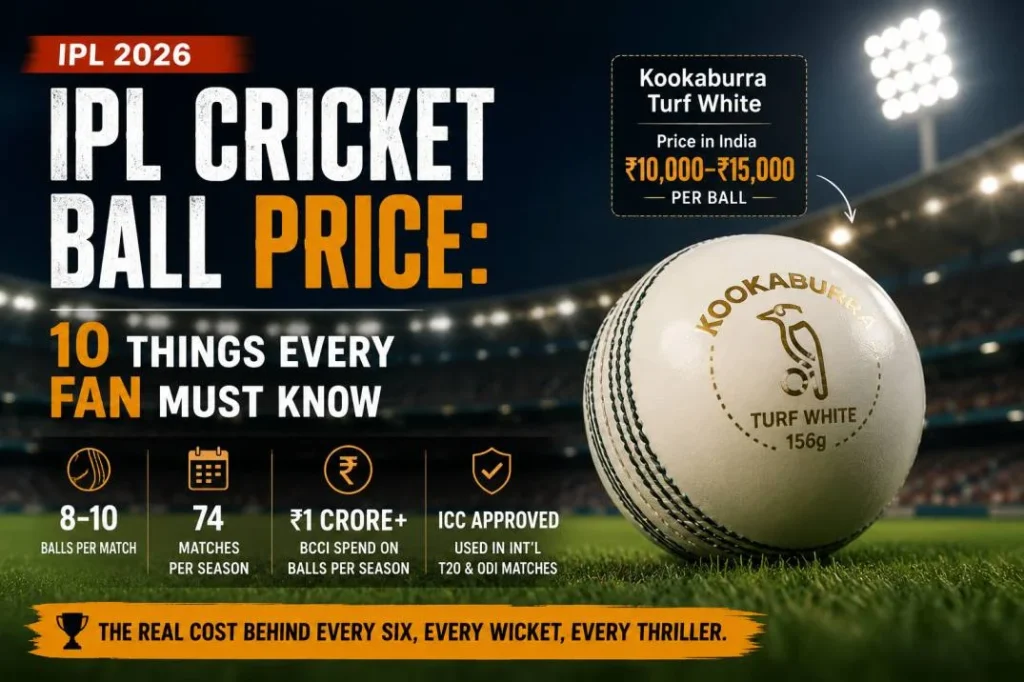
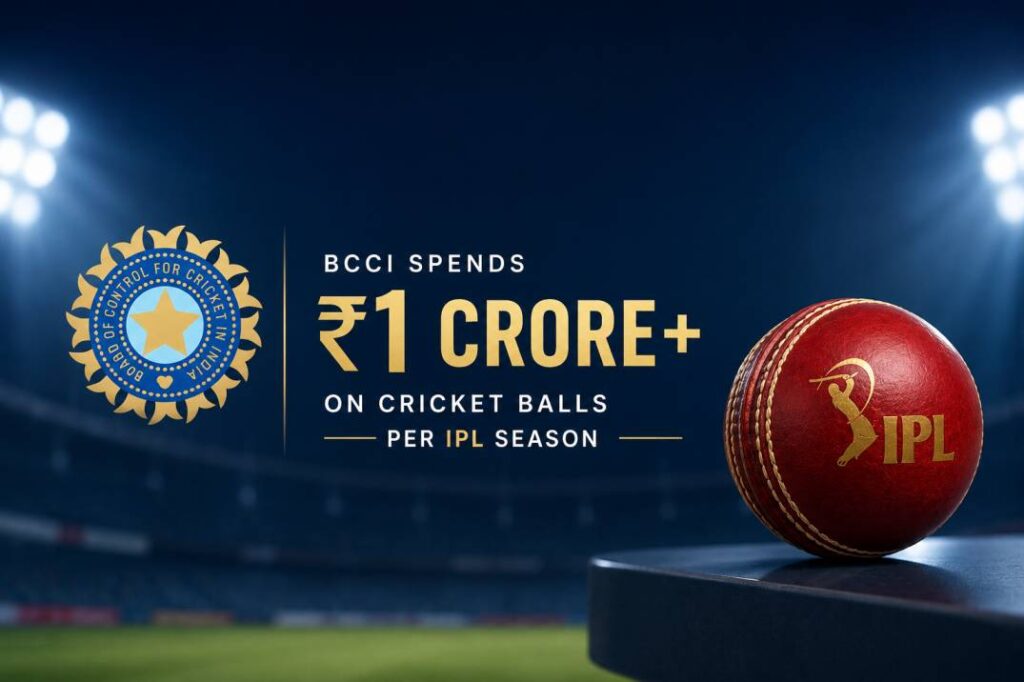
What is the IPL cricket ball price in 2026? The official ball used in IPL 2026 is the Kookaburra Turf White, which costs between ₹10,000 and ₹15,000 per ball. The SG white ball, also used in select IPL matches, costs around ₹4,000. Given that 8–10 balls are used per match across 74 games in a season, BCCI’s total spend on match balls alone crosses ₹1 crore per season.
This isn’t just a piece of leather. It’s precision engineering, global branding, and high-performance cricket science — all wrapped in one white sphere. Let’s break down everything about the IPL cricket ball price, one fact at a time.
· · ·
01
Official Ball
The IPL Uses the Kookaburra Turf White — and It Costs ₹10,000–₹15,000
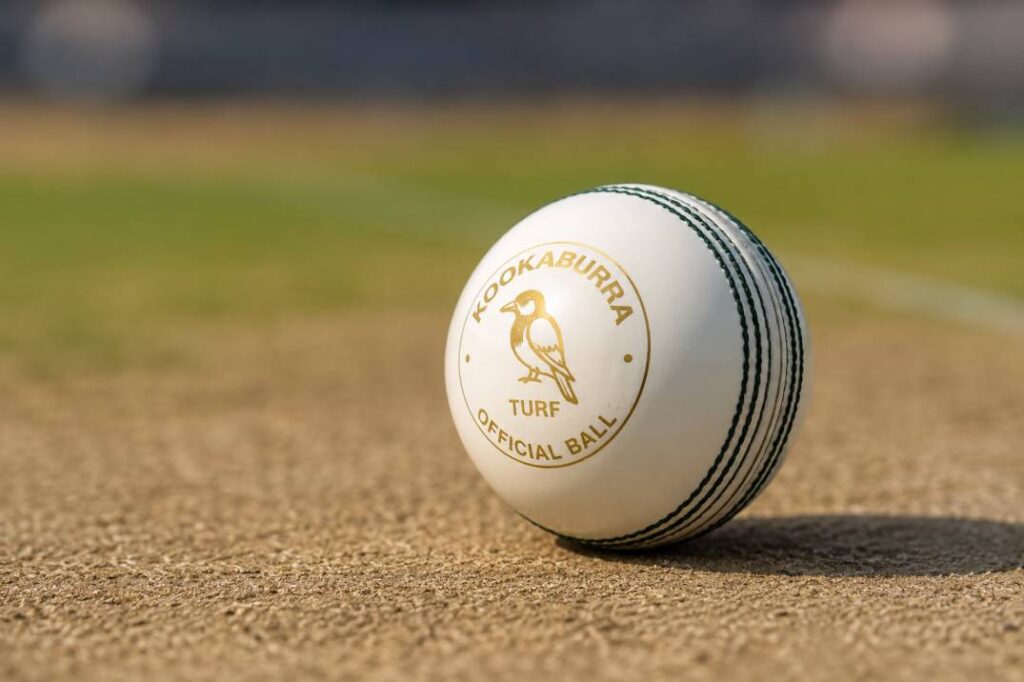
If someone asks you “which ball is used in IPL?”, the answer is the Kookaburra Turf White. This is the official match ball sanctioned by the BCCI for all IPL fixtures. The IPL cricket ball price for this model sits between ₹10,000 and ₹15,000 per ball at retail, depending on availability and seller.
Kookaburra, the Australian manufacturer, has been making premium cricket balls for over 130 years. Their white-ball variant is specifically engineered for the demands of T20 cricket — hard hitting from ball one, visibility under floodlights, and seam retention across 20 overs of relentless punishment.
Key fact: Kookaburra balls are used in 100% of ODI and T20 International matches globally, making them the single most trusted brand in professional limited-overs cricket.
02
Price Comparison
IPL Ball vs Regular Cricket Ball: The Price Gap Will Shock You
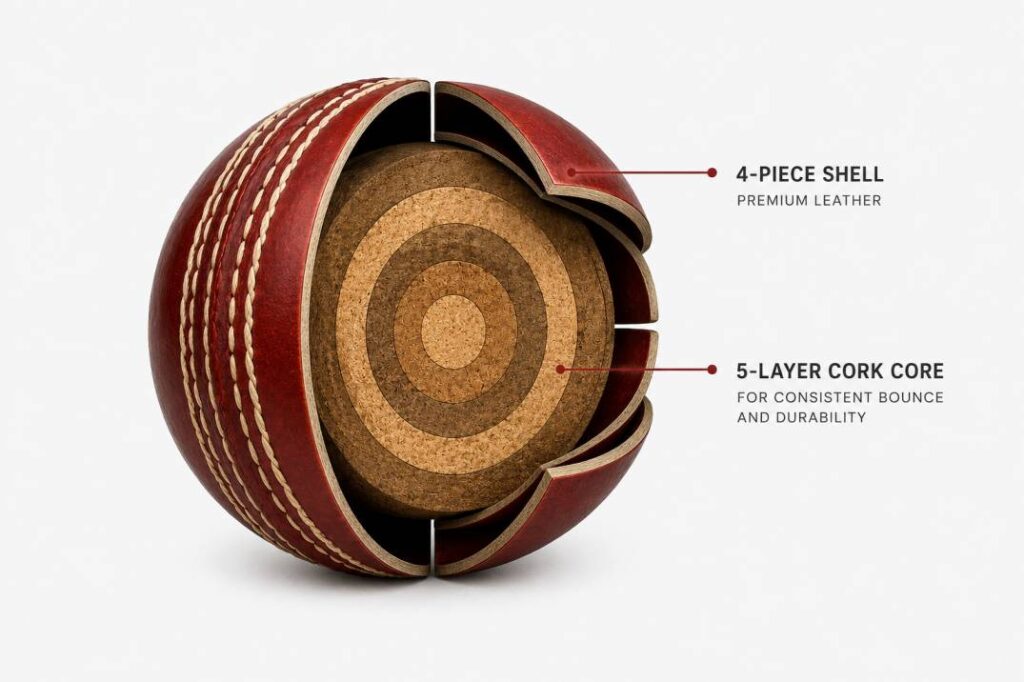
Most cricket fans play with leather balls that cost anywhere between ₹800 and ₹1,600. The IPL match ball costs nearly 10 times that. Here’s a complete price comparison of major cricket balls in India:
| Ball Type | Brand | Format | Price (₹) |
|---|---|---|---|
| Turf White IPL Official | Kookaburra | T20 / ODI | ₹10,000–₹15,000 |
| White Ball | SG (Sanspareils Greenlands) | T20 / ODI | ₹4,000 |
| Test Ball (Red) | SG | Test Cricket | ₹5,000–₹6,000 |
| Turf Red | Kookaburra | Test Cricket | ₹10,000–₹12,000 |
| Dukes Match Ball | Dukes (England) | Test Cricket | ₹8,000–₹10,000 |
| Regular Leather Ball | Various | Club / Practice | ₹800–₹1,600 |
The Kookaburra IPL ball commands the highest price in the T20 segment, and for good reason — its construction specifications are unlike anything used in recreational cricket.
03
What’s Inside
The Kookaburra IPL Ball Has a 4-Piece Construction and 5-Layer Core
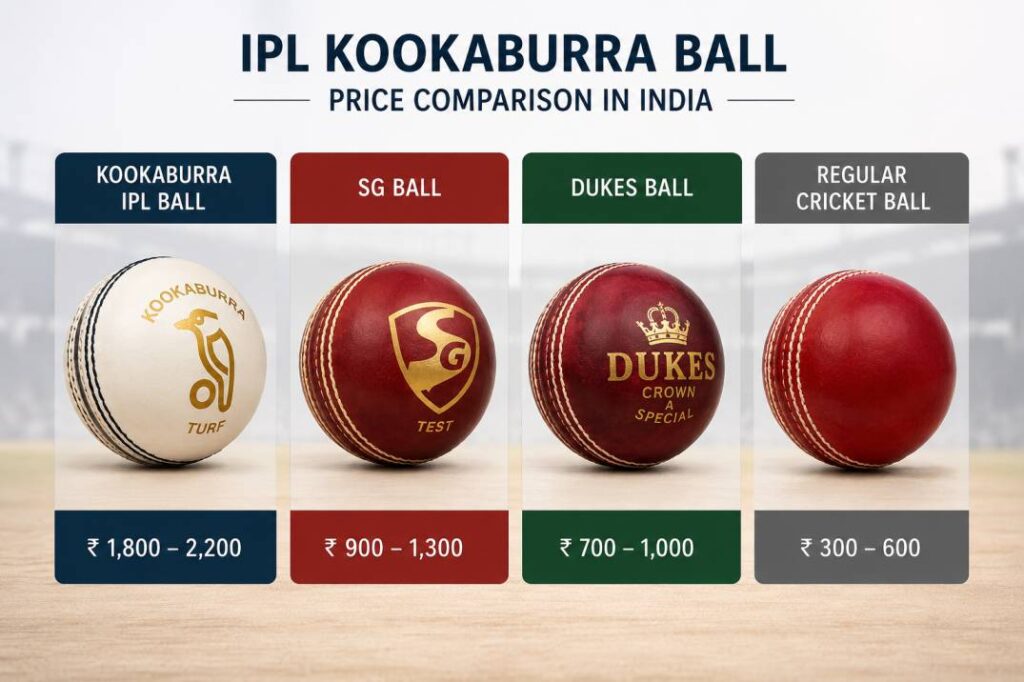
You might think a cricket ball is just leather stitched around some cork. The Kookaburra Turf White is far more sophisticated than that. Its construction directly justifies the IPL cricket ball price:
🔴
4-Piece Leather Shell
Four separate panels of premium alum-tanned leather are precisely cut and stitched to form the ball’s outer shell.
🧅
5-Layer Quilted Core
The center is a blend of cork and rubber, wrapped in multiple layers to provide consistent bounce and shock absorption.
💧
Waterproof Finish
A special coating resists dew and moisture — critical for IPL day-night matches played in humid Indian conditions.
⚖️
155.9g–163g Weight
Each ball weighs between 155.9g and 163g, with a circumference of 22.4cm–22.9cm — meeting ICC professional standards precisely.
The white lacquer finish is specifically designed to maintain visibility under high-powered LED floodlights at stadiums like Wankhede and Eden Gardens. This glossy coat is not cosmetic — it’s functional broadcasting science.
04
Per Season Cost
check :Vaibhav Suryavanshi
BCCI Spends Over ₹1 Crore on Balls Alone Every IPL Season
Here’s the math that will change how you watch every IPL delivery. Each IPL innings starts with a new ball, and 6 to 8 backup balls are kept ready per match. Over a full season, the numbers add up fast:
8–10 Balls per match
74 Matches per season
700+ Total balls a season
₹1Cr+ Season ball budget
At an average of ₹12,000 per ball and roughly 10 balls per match across 74 games, BCCI’s ball expenditure exceeds ₹88 lakh to ₹1 crore+ per IPL season. And that’s a conservative estimate — it doesn’t include practice balls, warm-up match balls, or replacements.
Mind-blowing fact:
A single IPL match can consume up to ₹60,000–₹90,000 worth of cricket balls — before anyone even hits a six.
Why So Expensive
check this link:SS Cricket
5 Reasons the IPL Ball Costs So Much More Than a Regular Cricket Ball
The IPL cricket ball price isn’t inflated by brand greed alone. Here are the legitimate factors that push the cost to ₹12,000–₹15,000:
1. Premium Leather Quality:
Kookaburra uses fully alum-tanned leather that is water-resistant, durable, and doesn’t deteriorate quickly under repeated impact. This grade of leather is significantly more expensive than what goes into club-level balls.
2. Precision Manufacturing:
While brands like Dukes rely on handstitching, Kookaburra combines machine precision with expert craftsmanship. Every ball undergoes strict quality-control testing before reaching a professional match — zero tolerance for weight or shape irregularities.
3. Import Duties and Logistics:
The Kookaburra is an Australian product. Import duties, freight costs, and currency conversion between AUD and INR add a significant premium to the final price in India.
4. BCCI Compliance Standards:
Balls used in IPL must meet BCCI-specific tolerances for seam height, weight, hardness, and bounce — a stricter standard than general retail balls. Only balls cleared through this protocol make it onto an IPL ground.
5. Brand Equity and Licensing:
Kookaburra being the official IPL supplier is essentially product placement for millions of TV viewers every night. That brand value is built into the pricing structure.
The SG Factor
SG Also Makes an IPL Ball — at Just ₹4,000. Here’s the Difference
India’s own Sanspareils Greenlands (SG) manufactures a white ball used in some IPL-level matches, priced at approximately ₹4,000 — nearly three times cheaper than the Kookaburra. Yet the Kookaburra remains the dominant choice for official IPL matches.
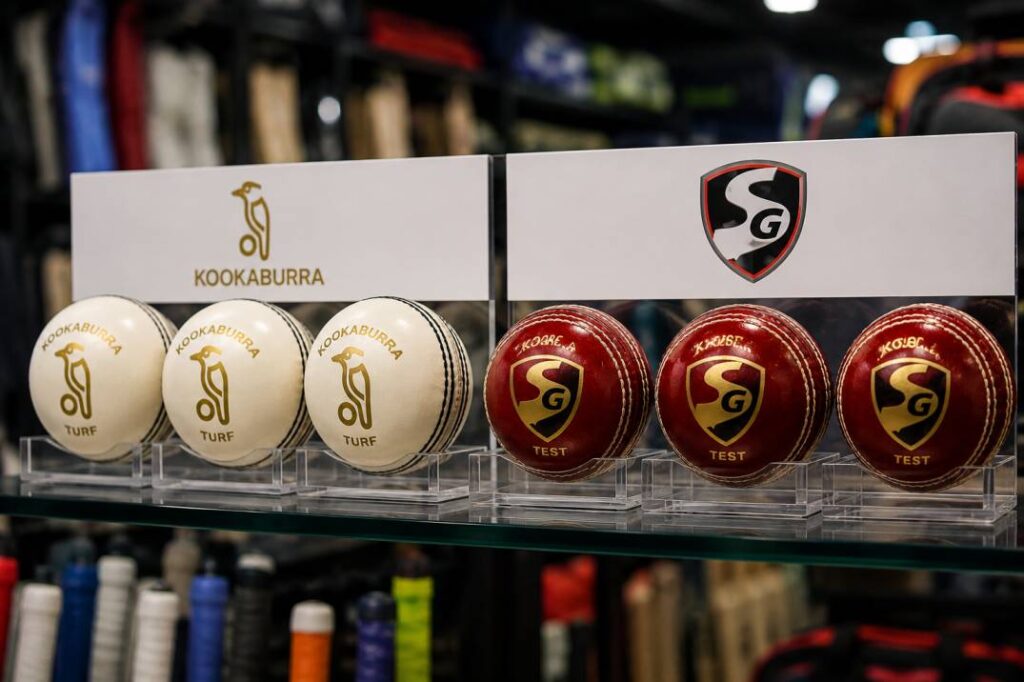
Why? The Kookaburra’s seam construction and leather quality maintain their performance for the full 20 overs more consistently under aggressive T20 batting conditions. The SG white ball swings beautifully in Indian conditions but is more commonly used in domestic T20 tournaments like the Vijay Hazare Trophy and Syed Mushtaq Ali Trophy.
For domestic cricket fans: If you’re looking to play with an IPL-level white ball at a fraction of the cost, the SG white cricket ball at ₹4,000 is an excellent choice for serious club cricket.
Match-Day Rules
IPL Has Strict Rules About When and How Balls Are Changed Mid-Match
The ball management protocol in IPL is far more complex than most fans realize. Here’s how it works on match day:
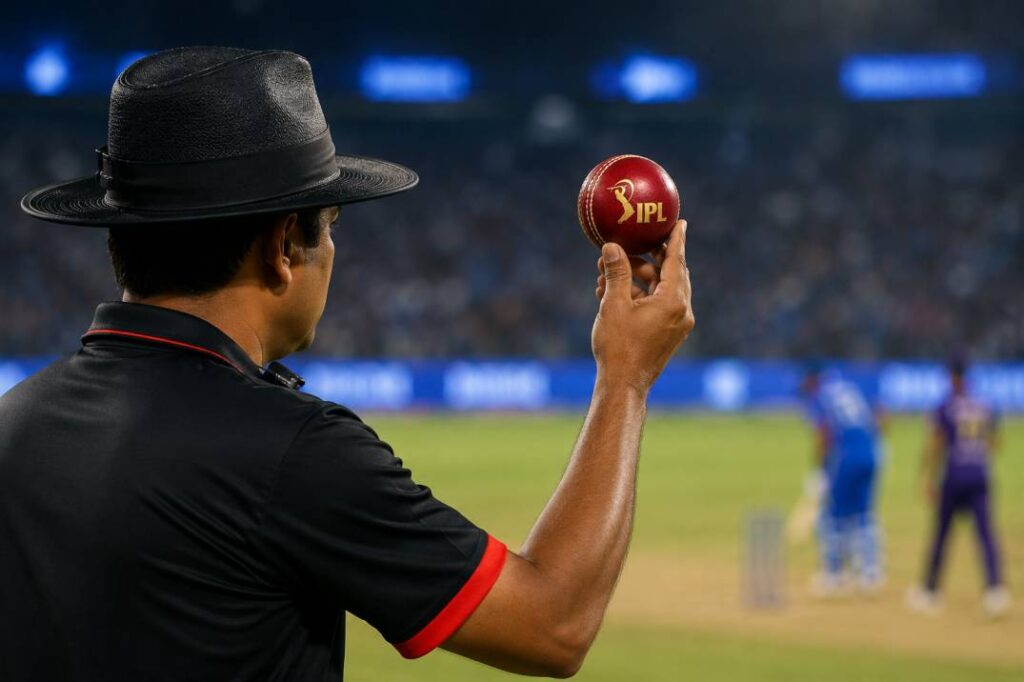
Each innings begins with a fresh white Kookaburra, selected by the fielding captain from a batch provided by the BCCI. The fourth umpire oversees this selection process to ensure full regulatory compliance. Typically, 6 to 8 backup balls are kept ready per innings.
A ball can be replaced mid-innings in two situations: if it is lost into the stands or crowd, or if the umpires deem it unfit for play due to abnormal wear. In evening matches where dew is a factor, teams bowling second are allowed one ball change after the 10th over — but the replacement must match the existing wear level, and the bowling team has no say in the choice.
Did you know? When a ball is hit into the crowd during an IPL match, the spectator actually keeps a ₹12,000–₹15,000 ball as a souvenir — and the BCCI simply opens a new one from the backup set.
Controversy
check : Shubman Gill
R. Ashwin Has Publicly Questioned Kookaburra Ball Quality in IPL
Not everyone is satisfied with the Kookaburra’s performance in IPL. Veteran off-spinner Ravichandran Ashwin has repeatedly raised concerns about how quickly the IPL ball loses its seam and shape compared to balls used in ICC events.
Ashwin’s argument is that the rapid deterioration of the Kookaburra’s seam directly hurts spinners and swing bowlers — the very players who could add more contest to T20 cricket. Once the seam flattens in the middle overs, the ball behaves like a soap bar, offering almost nothing to bowlers who rely on purchase or movement.
This debate has also raised a broader question within Indian cricket circles: Should the BCCI demand a higher-quality, IPL-specific Kookaburra model from the manufacturer? One with a more pronounced seam and extended durability — even if it costs more than the current ₹12,000–₹15,000 price point?
Where to Buy
Can You Buy an IPL Cricket Ball? Yes — Here’s Where and What to Expect
Absolutely — the Kookaburra Turf White is commercially available in India. You don’t need an IPL franchise or BCCI contract to get your hands on one. Here’s where to look:
Online Platforms: Amazon India and Flipkart carry Kookaburra cricket balls, though stock availability varies. Look for the exact model — “Kookaburra Turf White Official ODI and T20 Ball” — to ensure you’re getting the right one and not a practice or training variant.
Kookaburra Official Website: Kookaburra’s own platform ships to India and is the most reliable source for the authentic match-grade ball.
Specialist Cricket Stores: Cities like Mumbai, Delhi, Chennai, Hyderabad, and Bengaluru have dedicated cricket equipment stores that stock professional-grade balls. These are often better priced than online due to direct distributor relationships.
Important note: The exact balls physically used in IPL matches are not sold publicly. What you can buy is the same model and specification — but those specific BCCI-stamped match balls are retained after each game.
Big Picture
The IPL Ball Is Worth Every Rupee — and Here’s the Final Proof
Let’s zoom out for a moment. The IPL generates billions of rupees in revenue per season. BCCI reportedly earns approximately ₹49 lakh per ball bowled from media rights deals alone — meaning the ₹12,000 ball cost represents an infinitesimal fraction of the economic activity it powers.
Compare the ball to other IPL equipment costs: an English willow bat used by IPL players can cost between ₹20,000 and ₹60,000 — and batters reuse their bats across matches. The ₹12,000–₹15,000 ball is, by comparison, a consumable that gets replaced every innings.
The Kookaburra Turf White also enables what broadcasters need: HD and 4K cameras can capture every nick, edge, swing, and seam movement on a glossy white ball far more crisply than a dull or discolored one. That visual quality is not just for viewers — it’s also an aesthetic that sponsors pay top dollar to appear alongside.
In that light, the IPL cricket ball isn’t just sporting equipment. It’s a product, a broadcast prop, and a technology marvel — all rolled into 142 grams of leather and cork.
Frequently Asked Questions
What is the price of the ball used in IPL 2026?
The ball used in IPL 2026 is the Kookaburra Turf White. Its price in India ranges from ₹10,000 to ₹15,000 per ball, depending on the retailer and availability. Some sources cite the precise match-grade version at approximately ₹12,000.
Which company makes the IPL cricket ball?
The primary IPL cricket ball is manufactured by Kookaburra, an Australian company with over 130 years of cricket ball making history. The SG (Sanspareils Greenlands) white ball is also used in select domestic T20 competitions in India.
How many balls are used in one IPL match?
On average, 8 to 10 balls are used in a single IPL match. Each innings begins with a fresh ball, and 6 to 8 backup balls are kept ready per innings in case of loss or damage. Balls hit into the crowd are not retrieved.
Can I buy the official IPL cricket ball in India?
Yes, the Kookaburra Turf White ball — the same model used in IPL — is available for purchase on Amazon India, Flipkart, the Kookaburra official website, and at specialist cricket equipment stores across major Indian cities. Prices range from ₹10,000 to ₹15,000.
Why is the IPL cricket ball white instead of red?
White balls are used in T20 and ODI cricket — including IPL — because they are significantly easier to see under floodlights during day-night matches. The white lacquer coating also enhances visibility for HD and 4K broadcast cameras.
The Final Verdict on IPL Cricket Ball Price
The IPL cricket ball price of ₹10,000 to ₹15,000 isn’t just a number on a price tag. It’s the sum of over a century of manufacturing expertise, premium raw materials, professional-grade engineering, and the broadcast demands of the world’s most-watched T20 league.
The next time you see an umpire signal for a new ball or watch a six disappear into the Wankhede stands, remember: that white sphere flying through the Mumbai night is worth more than most people’s monthly grocery bill — and it’s been earned every single delivery.
Related searches: kookaburra ball price india · sg cricket ball price · ipl 2026 ball · cricket kit price india · ipl match equipment cost